01
Graph representation
Molecular structure encoded through SMILES must be transformed into graph data that a GCN or GAT model can process.

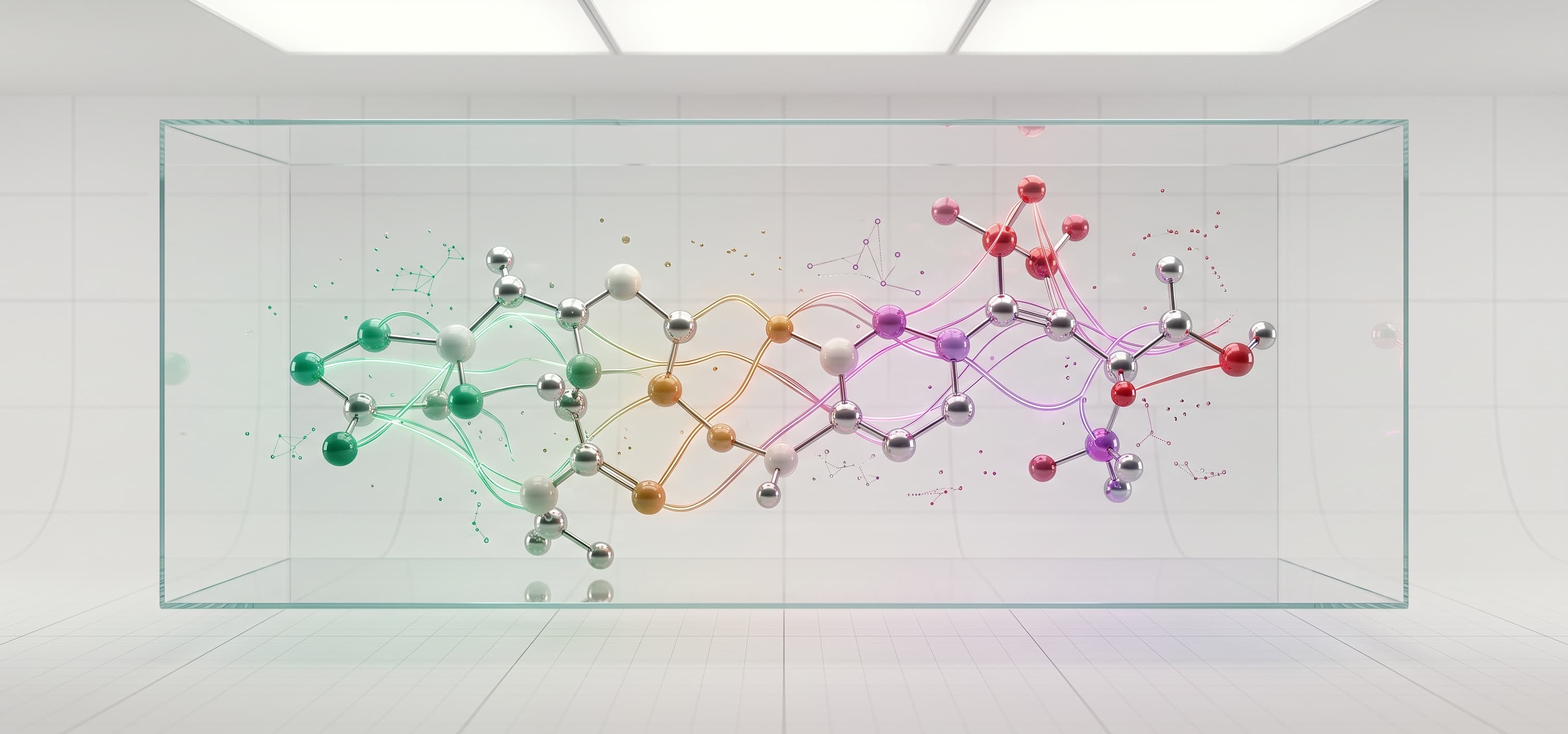
A molecular-toxicity exploration tool built around graph neural networks, SMILES input, and twelve prediction endpoints.
(Overview)
Tox21 provides an approachable interface for investigating in-silico toxicity predictions. Users can enter SMILES notation, work with a molecule library, or submit a batch for analysis across twelve endpoints.
Type
Machine-learning study
Role
ML & product engineering
Focus
Molecules · GNN · visualization
Status
Experimental product
(Introduction)
Tox21 turns graph-neural-network output into an exploratory interface for comparing molecules, endpoints, and toxicity signals.
(Problem)
Toxicity prediction involves specialized representations, imbalanced labels, multiple endpoints, and uncertainty. A useful interface has to preserve those constraints without becoming inaccessible.
01
Molecular structure encoded through SMILES must be transformed into graph data that a GCN or GAT model can process.
02
One molecule may produce different signals across twelve toxicity targets, making a single binary label insufficient.
03
Predictions need clear limits: the result is an in-silico aid, not a substitute for laboratory validation.
(Approach)
The workflow was shaped around how someone investigates a molecule: provide or select a structure, run prediction, compare endpoint signals, and retain enough context to interpret the result responsibly.
(Solution)
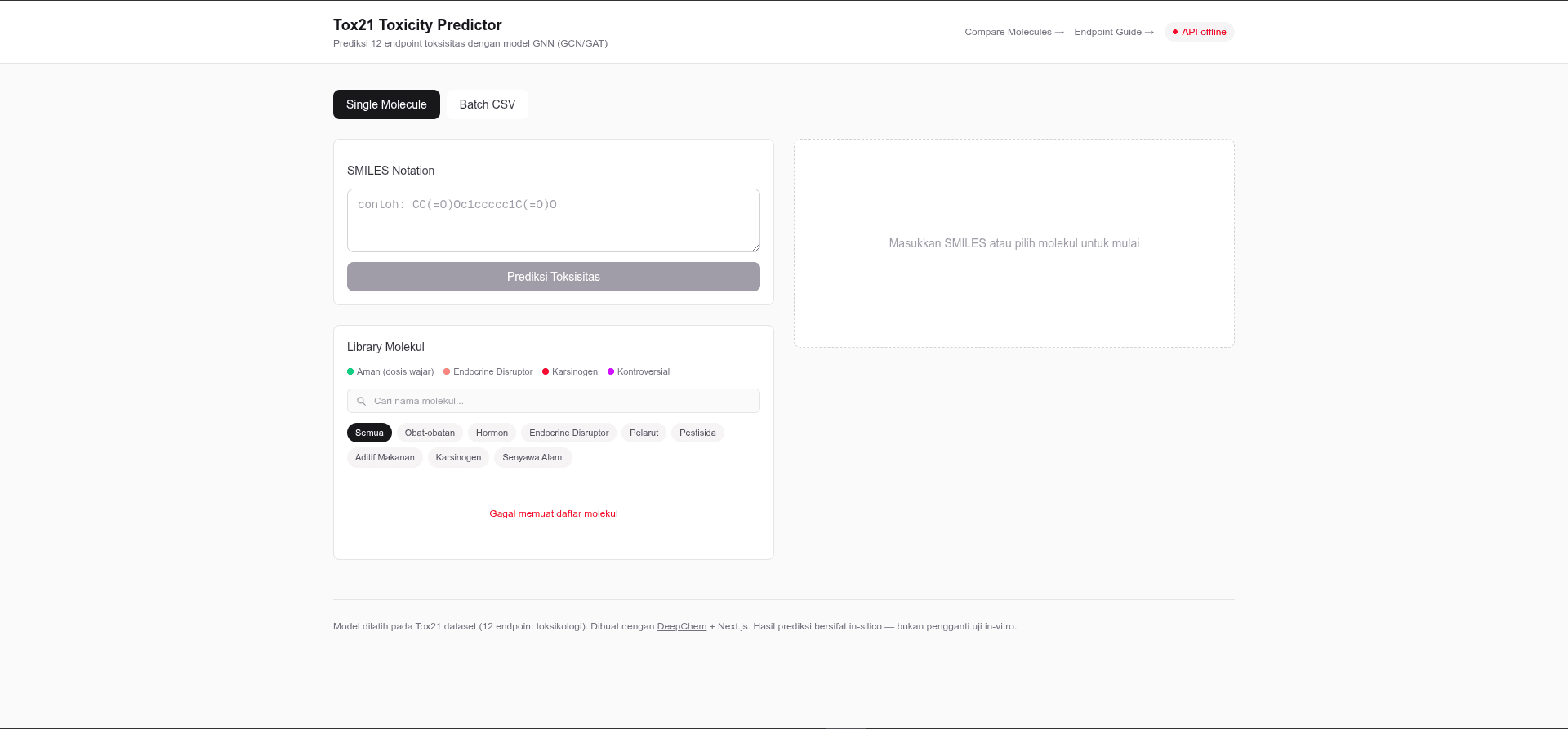
The product joins a DeepChem prediction pipeline with a restrained Next.js interface. It supports direct SMILES input, categorized molecule discovery, comparison, and batch CSV workflows.
01
Users can submit a molecular representation directly for toxicity analysis.
02
The result preserves the multi-target nature of the Tox21 dataset.
03
Example compounds can be filtered by categories such as drugs, hormones, solvents, and pesticides.
04
Multiple compounds can be prepared for a broader analysis workflow.
05
Results can be evaluated side by side instead of in isolated screens.
06
The interface clearly positions output as an in-silico prediction requiring further validation.
(Outcome)
Tox21 brought graph-based modeling, chemical representations, API behavior, and product interface decisions into one focused experiment.
The outcome is not a laboratory verdict. It is a clearer way to inspect predicted toxicity signals and understand where deeper investigation should begin.