01
Material ambiguity
The physical system needed to make a useful distinction between plastic and non-plastic material at the point of disposal.


An IoT-assisted waste workflow for material detection, verified collection, and realtime operational tracking.
(Overview)
HolyBin connects material recognition with the people responsible for collection. The system distinguishes plastic from non-plastic waste, then records collection activity through a web-based operational flow.
Type
IoT & operational platform
Role
Software engineering team
Focus
Detection · validation · tracking
Status
Working prototype
(Introduction)
HolyBin connects physical waste detection with verified pickup activity so the operation can be observed from disposal to collection.
(Problem)
A smart bin can classify material, but the process still becomes invisible when there is no reliable way to verify collectors, record pickups, and monitor activity over time.
01
The physical system needed to make a useful distinction between plastic and non-plastic material at the point of disposal.
02
Collection activity required a simple identity mechanism so each pickup could be associated with the responsible person.
03
Without a shared operational record, administrators could not easily monitor recent activity or investigate what happened earlier.
(Approach)
The team treated detection, collector validation, and administration as a single lifecycle. Sensor events had to become readable operational state inside the web application.
(Solution)
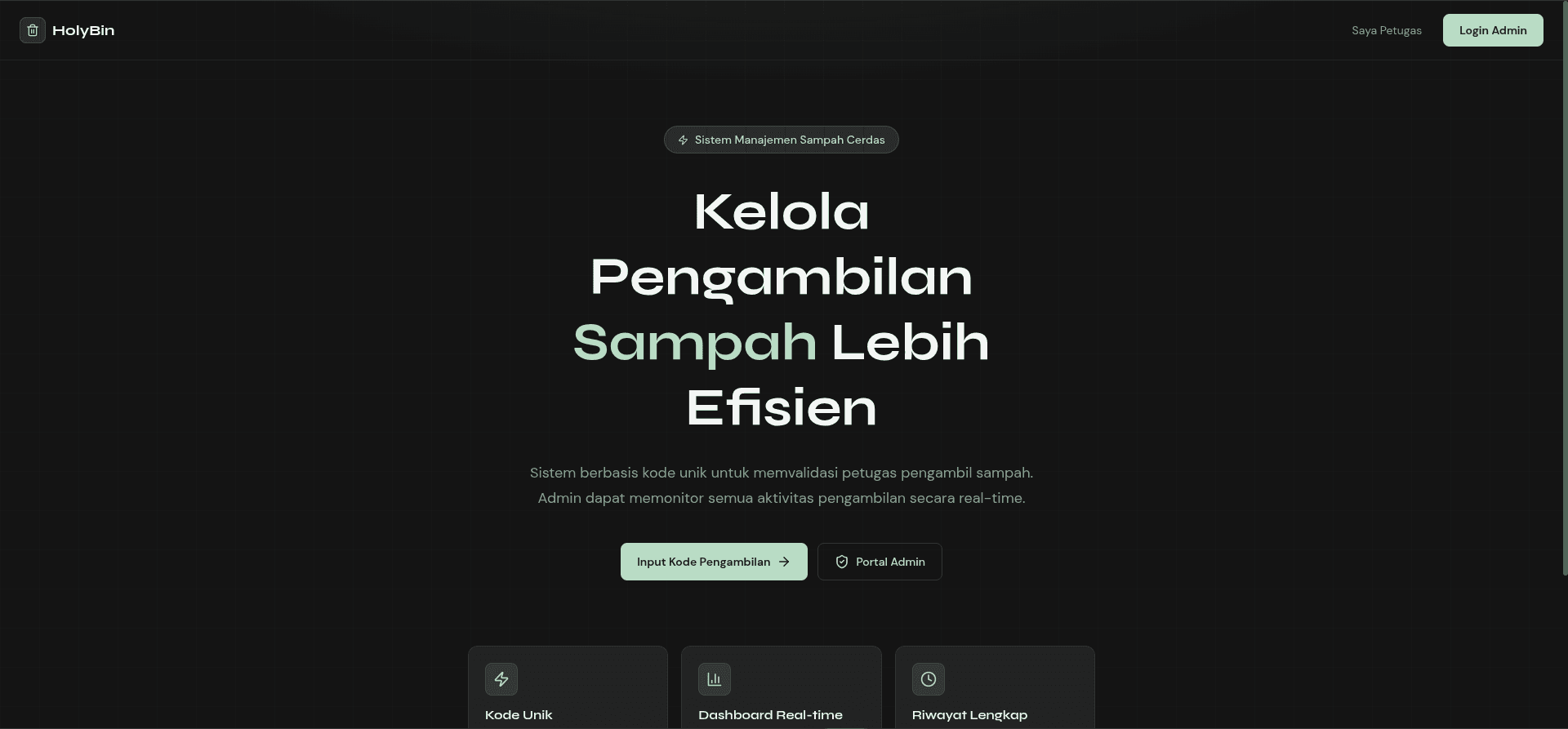
HolyBin pairs the IoT prototype with two human-facing experiences: a lightweight validation flow for collectors and an administrative dashboard for live monitoring and historical review.
01
Sensors support automatic classification between plastic and non-plastic waste.
02
Collectors validate an assignment through a code-based attendance and pickup flow.
03
Administrators can monitor collection activity as operational state changes.
04
Completed activity is retained so the process remains traceable after pickup.
05
Collector and administrator experiences expose only the actions each role needs.
06
Physical signals and web interactions share one coherent operational model.
(Outcome)
HolyBin became a practical exercise in coordinating sensor behavior, realtime data, interface state, and human responsibilities.
The result shows that a connected product becomes useful when the physical event and the operational record tell the same story.